Commercial hygiene experts located in Brampton ensure restaurants, commissaries, baking enterprises, warehouses, and food service vehicles to sanitation standards. They disinfect high-touch surfaces, food prep surfaces, equipment, floors, drains, restrooms, and food handling areas using approved sanitizers, at proper strength, and using documented contact periods.
Important Highlights
- Food safety cleaning technicians in Brampton cater to restaurants, grocery departments, commissaries, warehouses, bakeries, schools, mobile vendors, and allergen-sensitive operations.
- Compartmentalized approaches disinfect high-touch surfaces, food-contact equipment, kitchens, floors, drains, restrooms, and storage areas for eliminating cross-contamination.
- Approved sanitizer dilution, alignment, and exposure duration are checked by trained vendors, with completion recorded via swabs, assessments, and action records.
- Regular, regular, and annual activities designated by section form hygiene calendars built on hazard, output capacity, changeovers, incidents, and regulations.
- Pick providers with HACCP, health regulatory, understanding, WHMIS, instruction, protection, testimonials, coded equipment, and inspection-ready cleaning records.
Which Brampton Facilities Need Food Safety Cleaning?
You must comply with food safety cleaning if your facility is falls under public health inspection, food premises regulations, or internal HACCP-based controls. This covers food venues, break rooms, food centers, supermarket areas, butcheries, seafood displays, shops, and commercial food prep.
Adherent sanitation standards proves needed in supply warehouses, processing plants, freezer locations, commercial bakeries, school food programs, reception facilities, and food delivery centers. Mobile and temporary operations count too, such as mobile kitchens, market vendors, and seasonal booths. Your venue needs documented cleaning protocols if your workers process ingredients, portion ready-to-eat items, reheat products, or store allergens. In Brampton, cleanliness remains not voluntary; it represents statutory, functional, and public health adherence.
What Do Brampton Cleaning Experts Clean?
Your operation needs cleaning professionals who disinfect frequently contacted surfaces, kitchens, floors, and toilet facilities for food safety and health code adherence. These specific areas are emphasized due to their elevated cross-contamination potential, hazardous walking conditions, and violations of hygiene standards.
When you understand what they clean, you can ensure your operation's cleaning procedures satisfy compliance and operational standards.
Key High-Touch Surface Disinfection
Skilled Brampton janitorial staff recognize that high-touch surfaces require cleaning since these areas contain microbes and organic residue. You need a documented schedule for sanitizing all high-touch items including handles, plates, switches, railings, control surfaces, POS systems, and refrigeration equipment. Implementing contact point analysis, specialists locate every frequently handled area and determine cleaning timing
replacing wipes regularly, using directional systems, and organizing sanitization equipment according to section. These measures keep your sanitizing program documented, well-documented, and audit-prepared at all times.
Food Prep Areas, Flooring, and Sanitary Facilities
Professional cleaners in Brampton concentrate on kitchens, floors, and restrooms given that each location involves distinct food safety, slip-and-fall, and health code requirements. In industrial kitchens, you need grease removal from cooking stations, appliance surfaces, drain systems, preparation areas, and backsplashes to reduce contamination and pest pressure.
Floor care that is documented should equally be anticipated. Technicians scrub and extract buildup from tile grout, ceramic surfaces, and vinyl floors, then apply suitable dehydration methods so you can reduce slip incidents and meet regulatory standards. They also address entryways where moisture and debris migrate indoors.
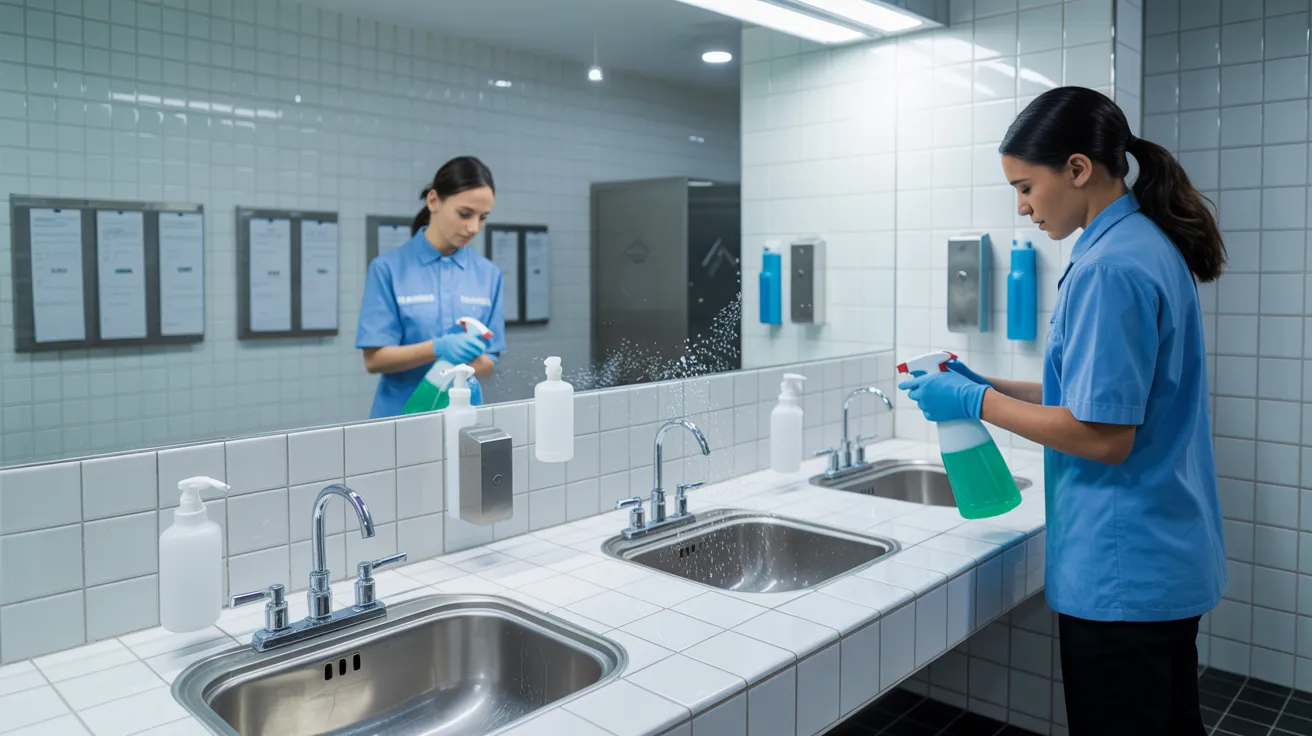
Restroom cleaning involves disinfecting touchpoints, fixtures, partitions, dispensers, and waste containers, restocking supplies and controlling odours. They also maintain restaurant cleaning supply rooms where product storage, sink cleanliness, and drain systems impact daily sanitation standards and worker protection.
Why Food Safety Cleaning Matters in Brampton
In Brampton, you must maintain food-safe cleaning standards to meet health code requirements and achieve compliance. You also reduce cross-contamination by cleaning and sanitizing food-contact surfaces, equipment, and high-touch areas correctly. Most importantly, you safeguard public health by lowering the risk of foodborne illness in your facility.
Sanitary Standards Adherence
Brampton food operations must comply with stringent health requirements, so hygiene maintenance is key to adhering to health codes, defending customers, and eliminating penalties. You must maintain clean food preparation areas, written maintenance records, proper chemical use, and traceable training practices that meet municipal and provincial inspection expectations.
Should your cleaning standards deteriorate, you face notices, corrective orders, reputational harm, and possible interruption to service during follow-up inspections or enforcement actions.
Cross-Contamination Prevention
Maintaining health code standards copyrights on your capacity to prevent cross-contamination during daily food handling and cleaning. You need to partition uncooked items from finished dishes, sanitize prep surfaces between tasks, and position cleaning agents away from food surfaces. Clear procedures reduce transfer risks and support consistent compliance during inspections.
You should implement allergen segregation to prevent major allergens from touching common work areas, storage bins, or tools. Employ separate boards, labeled implements, and careful equipment identification so employees avoid combining products during preparation or service. Mandate washing hands following uncooked proteins, shellfish, egg items, or allergen products. Replace wiping cloths regularly, and check disinfectant potency using test kits. When you train staff to follow these controls each work period, you create a cleaner, safer operation that satisfies Brampton's safety standards daily.
Community Health Protection
When sanitation protocols fails, you don't just face inspection failure—you increase the chance of food-related sickness impacting customers, staff, and the wider Brampton community. You also undermine your responsibility in safeguarding community wellness, especially in high-traffic food premises where contamination can spread quickly through surfaces, equipment, and touchpoints.
You must implement cleaning procedures that remove soils, effectively sanitize, and ensure effectiveness. This involves maintaining contact periods, utilizing authorized sanitizers, maintaining records, and training employees to meet compliance standards. These actions support pathogen control by suppressing pathogens before contaminating food or hands. In Brampton, effective cleaning protects at-risk groups, curtails outbreak likelihood, and proves your diligence. When you adhere to proper protocols, you exceed requirements—you meaningfully lower danger and promote secure food service throughout the city.
How Does Cleaning Support Food Safety Compliance?
Upholding thorough cleaning protocols improves food safety compliance by reducing contamination risks, limiting pathogen development, and positioning your facility in accordance with sanitation requirements under HACCP-based programs and public health regulations. You validate that food-handling surfaces are visibly clean and microbiologically controlled, facilitating documented preventive controls and inspection readiness.
Strategic cleaning practices also strengthen allergen mitigation by extracting residues that can trigger undeclared allergen exposure.
When Should You Plan Commercial Cleaning?
Establish cleaning plans based on risk levels, production rates, and compliance requirements instead of relying solely on a predetermined calendar. You should schedule explanation routine cleaning every day
Handling regular tasks distinctly guarantees better organization.
How Do You Choose Brampton Cleaning Experts?
Screen providers initially by their food-safe sanitation requirements—not budget alone. You need to verify that every company meets CFIA, public health, and HACCP-aligned expectations for your operation. Demand insurance verification, WHMIS compliance, training records, and management systems. Evaluate technician understanding of contamination dangers, chemical safety, and documented sanitation practices.
Additionally, you need to evaluate operational reliability and responsibility. Obtain references from Brampton food operations, then review response times, corrective measures, and communication practices. Verify the company conducts supplier reviews and can deliver inspection-ready documentation when inspectors or external parties need proof. Verify equipment upkeep, colour-coded tools are applied correctly, and location-specific dangers are identified. A qualified provider protects compliance, product quality, and your reputation.
What's covered in a sanitation cleaning strategy?
Write out a plan that outlines every sanitation task, standard, and responsibility before starting production. You should record cleaning frequencies, approved chemicals, dilution rates, contact times, tools, and verification methods for each zone, surface, and piece of equipment. Remember to add pre-operational inspections, corrective actions, and employee training requirements.
Your program should also address contamination prevention, garbage management, pest control procedures, and recorded timelines for bathrooms, drainage systems, surfaces, and food-preparation zones. Explain how you'll separate raw and ready-to-eat processes, support ingredient tracking, and maintain accurate allergen labeling through validated cleaning between product changes. You should assign accountability, maintain signed records, and compare results against regulatory standards, HACCP controls, and customer requirements. When gaps appear, revise procedures immediately and retrain staff.
Popular Asked Inquiries
Can cleaning services accommodate overnight shifts in Brampton properties?
Yes, you can book sanitation coverage to accommodate nighttime operations in Brampton facilities. You'll coordinate nighttime cleaning around production schedules, access requirements, and personnel needs. Services typically establish nighttime procedures to reduce interruption, maintain standards, and record finished tasks. You should confirm arrival schedules, management, lockout protocols, and disposal procedures before starting service.
Are hazard containment services provided from Brampton cleaning experts?
Yes, you can find many Brampton sanitation professionals who provide hazard containment services. They manage hazardous materials, evaluate dangers, contain contamination, and start rapid decontamination to minimize risk and prevent business interruption. You should confirm response times, professional credentials, PPE protocols, and disposal procedures. If your facility must meet regulatory requirements, select a service that records events, maintains regulatory procedures, and supports audit readiness.
Do environmentally safe disinfectants perform safely on food preparation areas?
Definitely, natural disinfectants function safely on food-contact surfaces if you purchase products labeled food safe that adhere to regulatory compliant. You need to verify contact times, dilution rates, and rinsing needs ahead of deployment. Plant based formulas reduce harsh chemical exposure, but you require evidence of effectiveness against harmful bacteria. To keep surfaces residue-free, implement exact manufacturer guidelines and confirm your sanitizer adheres to relevant food safety standards.
Do sanitation programs enable seasonal variations?
Yes, you can tailor cleaning schedules for production fluctuations. You should revise frequencies, staff levels, cleaning agents, and validation steps to align with seasonal patterns while preserving regulatory requirements. You'll minimize production interruptions by organizing disinfection around production shifts, maximum output, and usage cycles. You should additionally update written procedures, instruction programs, and facility monitoring to account for temporary risks, new allergens, or higher contamination levels. Regular reviews preserve your program effective.
Are professional cleaning companies providing staff training on sanitation best practices?
Certainly, commercial cleaners train your employees on hygiene protocols. You obtain employee development on proper chemical use, processing times, contamination control, machine disassembly, and documentation. They generally coordinate coaching with HACCP, GMP, and CFIA or regional health bodies requirements. Many execute health assessments to verify compliance, uncover shortcomings, and reinforce corrective actions. This helps you copyright standard processes, pass inspections, and minimize foodborne pathogen risks every day.
Closing Remarks
Partnering with Brampton food safety and commercial cleaning professionals means more than cleaning—it ensures your facility meets inspection standards and your standards remain compliant. From processing facilities to kitchens, each cleaned area and organized section reduces health hazards and avoids costly disruptions. By scheduling maintenance on appropriate schedules and executing a comprehensive cleaning strategy, you shield staff, your customers, and your reputation. In a tightly controlled market, sanitary conditions can't be overlooked—they're critical to business success.